
Blog
Woodland Camouflage: Patterns and Use

Why "Woodland" Camouflage Is a Category of Its Own
Camouflage doesn't solve every problem in every environment. A pattern built to break up silhouettes against sand and rock will backfire in a forested environment, and vice versa. This guide focuses exclusively on patterns designed or specifically adapted for temperate and tropical woodland environments. Desert, urban, and snow patterns are meant to solve entirely different problems and are deliberately left out — including them here makes no sense.
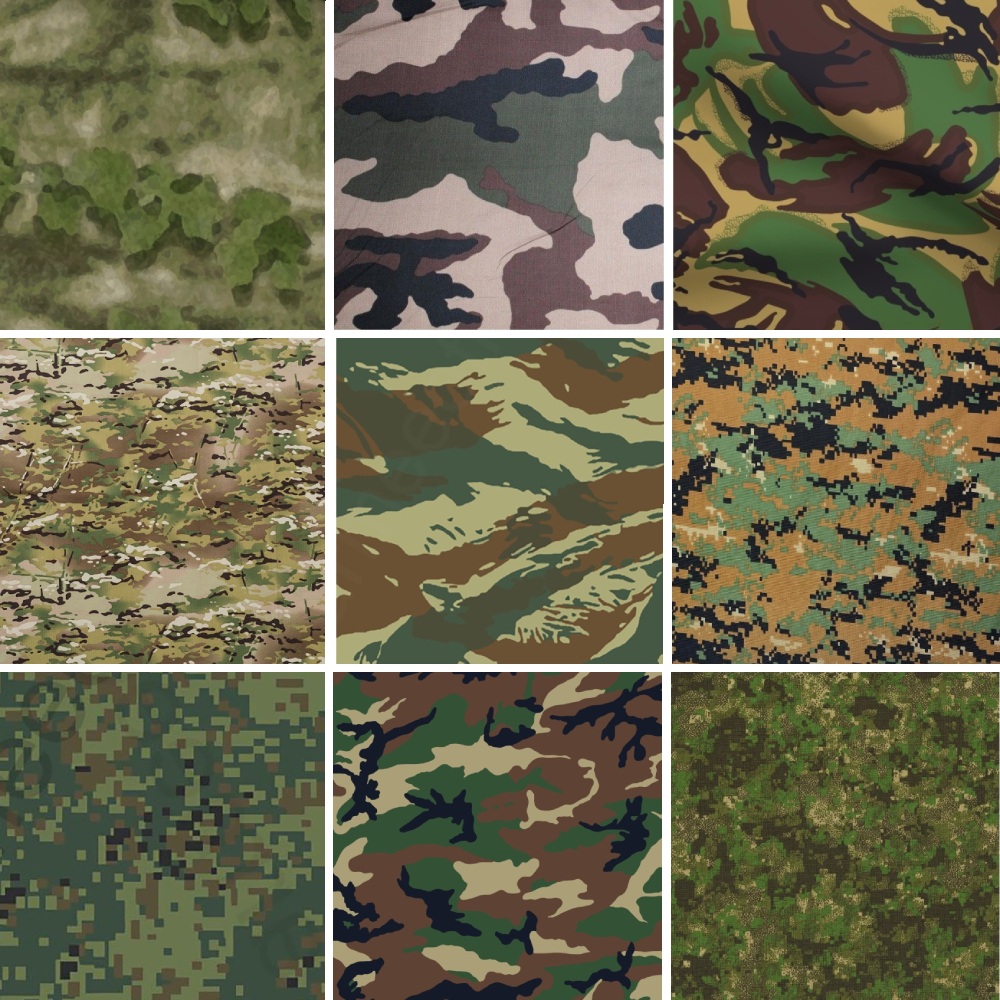
In this article, we'll dive into the 15 most common: A-TACS FG, DPM, MTP, CCE, MARPAT, CADPAT, EMR/Digital Flora, MultiCam, MultiCam Tropic, Greek Lizard, M81 Woodland, Vegetato, PenCott Wildwood, Flecktarn, and Tiger Stripe.
Note: Every claim below has been verified through Camopedia, official manufacturer documentation (Crye Precision, Hyde Definition/PenCott, A-TACS/Digital Concealment Systems), Wikipedia camouflage entries, Soldier Systems Daily, and specialized camouflage design articles. You'll find the full list of referenced sources at the end of this article.
The Viewing Distance Variable
Color and how well a pattern "blends" into the background is only one part of the equation. Camo designers work with two primary tools: macro-pattern elements (large shapes and blotches that break up your silhouette when viewed from afar) and micro-pattern elements (detailed textures and small shapes that prevent identification up close). Older, single-scale patterns usually pick one to optimize for — typically the long-distance problem. Newer "multi-scale" or fractal patterns nest small shapes inside medium shapes inside large shapes within the same print, ensuring the camouflage works effectively whether the observer is five meters or three hundred meters away.
The Brushstroke and Lizard Family
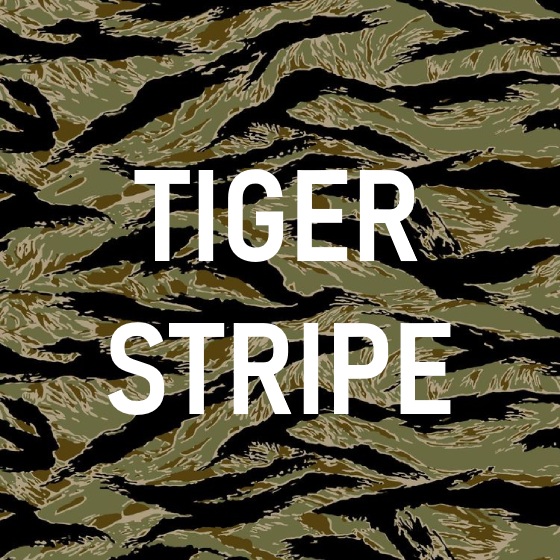
Tiger Stripe
Origins and history: Tiger Stripe evolved from the French colonial "lizard" pattern used in Indochina and was first produced for the Vietnamese Marine Corps around 1957. The Republic of Vietnam Marine Division developed it further, and between 1961 and 1962, it was used by ARVN Rangers and Special Forces. Fabric was manufactured locally in South Vietnam as well as in Japan, South Korea, and Taiwan. US advisors and later special operations personnel wore it while embedded with Vietnamese units, but it was never an officially issued US pattern.
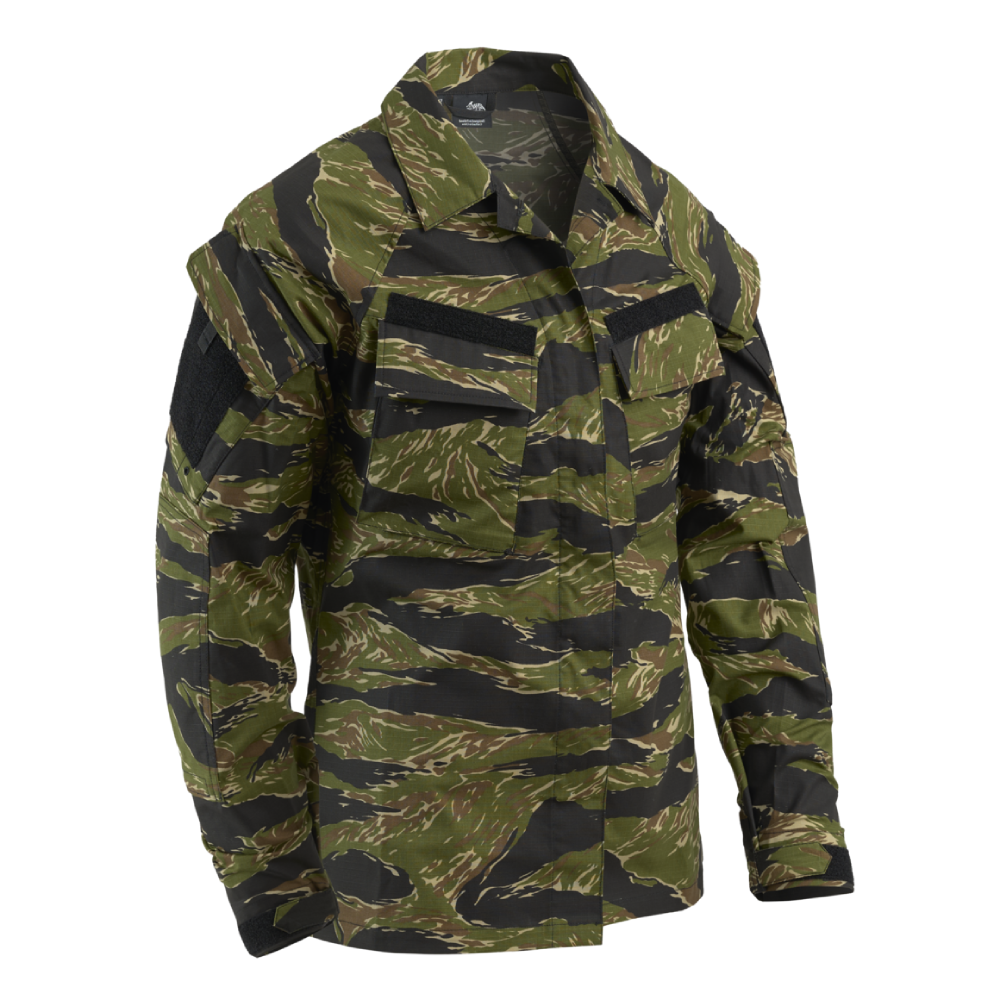
Design: Overlapping, asymmetrical stripes in green, brown, and black with light outlines, designed to mimic the vertical shadows of bamboo and dense tropical vegetation under overhead tree cover in low light.
Scale design: Single-scale brushstroke. Effective at the close engagement ranges found in thick jungle, where sightlines are naturally limited.
Best environment: Dense tropical jungle with thick foliage and low light.
Current status: Historical. No modern military uses Tiger Stripe as a standard-issue camo. Everything on the market today is a collector's reproduction or lifestyle/hobby apparel, not a choice for operational use.
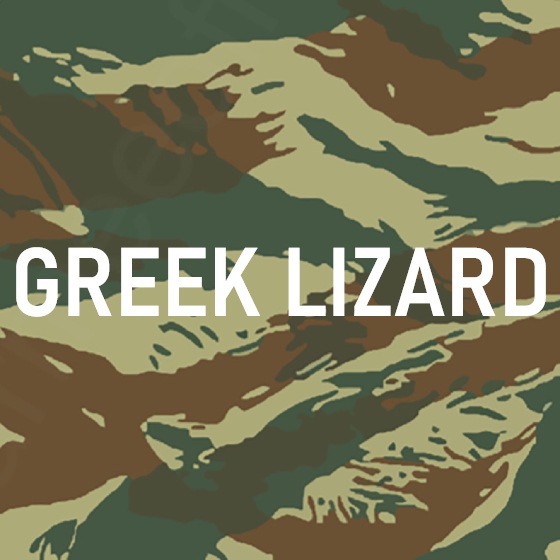
Greek Lizard
Origins and history: The first domestically produced camouflage pattern in Greece, introduced in the mid-1970s as a local adaptation of the French pattern officially designated "tenue léopard" — literally "leopard suit." The same pattern is known internationally in English as "lizard." (This isn't a mistranslation: it comes from the nickname given to French paratroopers during the Algerian War, which carried over to their camouflage). The Greek variant darkened the greens and browns to match Mediterranean terrain. A second generation followed in the late 1980s / early 1990s in a lighter ripstop fabric. In late 2023, the General Staff announced a new update (M24) that shifts the palette toward earthier tones while keeping the traditional lizard shapes.
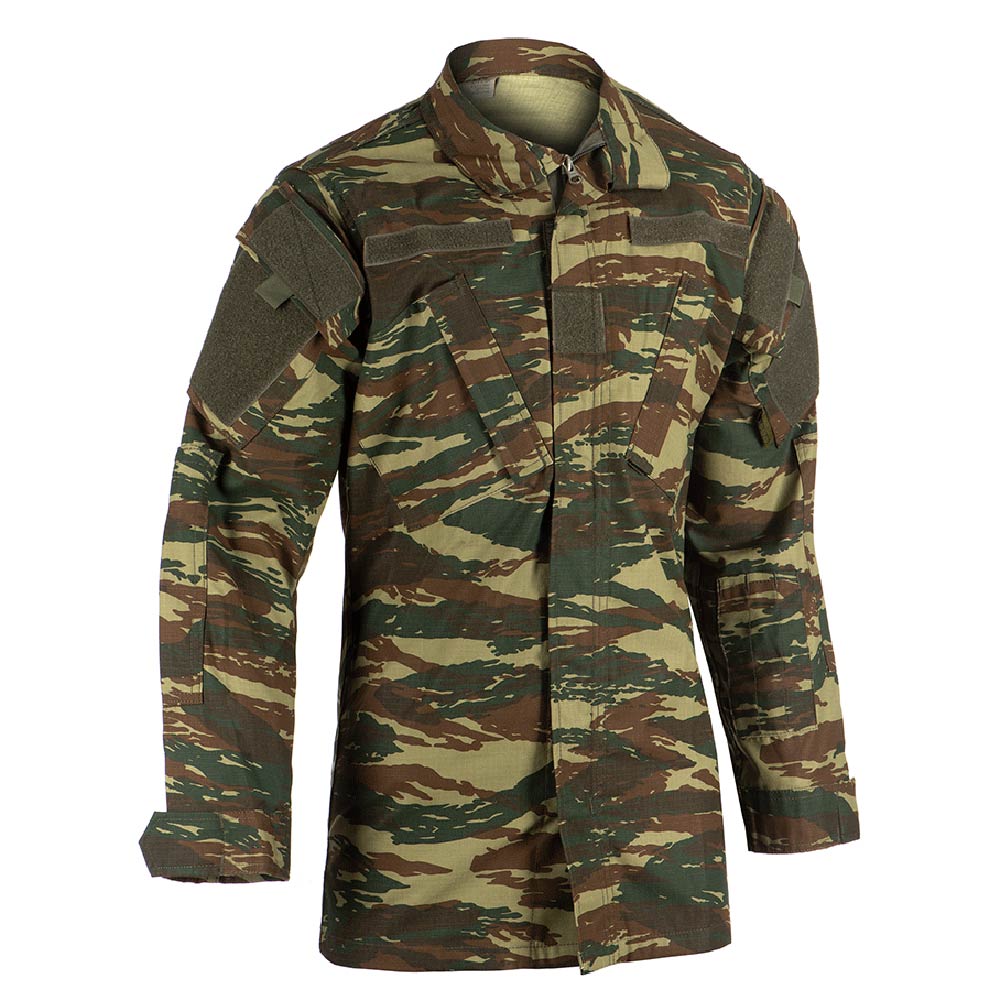
Design: Overlapping horizontal brushstrokes (dark brown, dark olive) over a light green background — a 3-color pattern.
Scale design: Single-scale brushstroke, similar to Tiger Stripe — built for closer engagement distances, not for long-range disruption.
Best environment: Optimized for dry Mediterranean woodland and rocky, scrubby terrain rather than lush green forests. In dense, wet woods with rich foliage, it'll still work, but it's not the most effective option.
Current status: Active with the Hellenic Armed Forces since the 1970s, with the M24 revision rolling out at the time of writing.
The Blotch and Spot Family
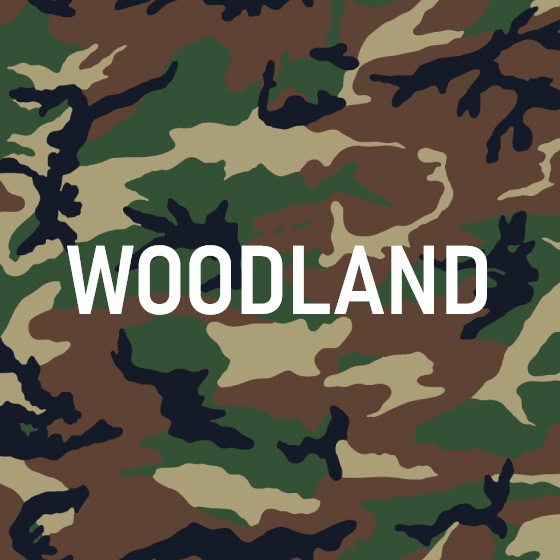
M81 Woodland
Origins and history: Adopted by the US Military in 1981 for the new Battle Dress Uniform (BDU), developed at the Natick Soldier Center as the successor to the Vietnam-era ERDL pattern. Researchers enlarged the shapes compared to ERDL specifically to keep it effective against early night-vision systems. It became the standard pattern for all US service branches throughout the 1980s and '90s, seeing action everywhere from Grenada to the Gulf War.
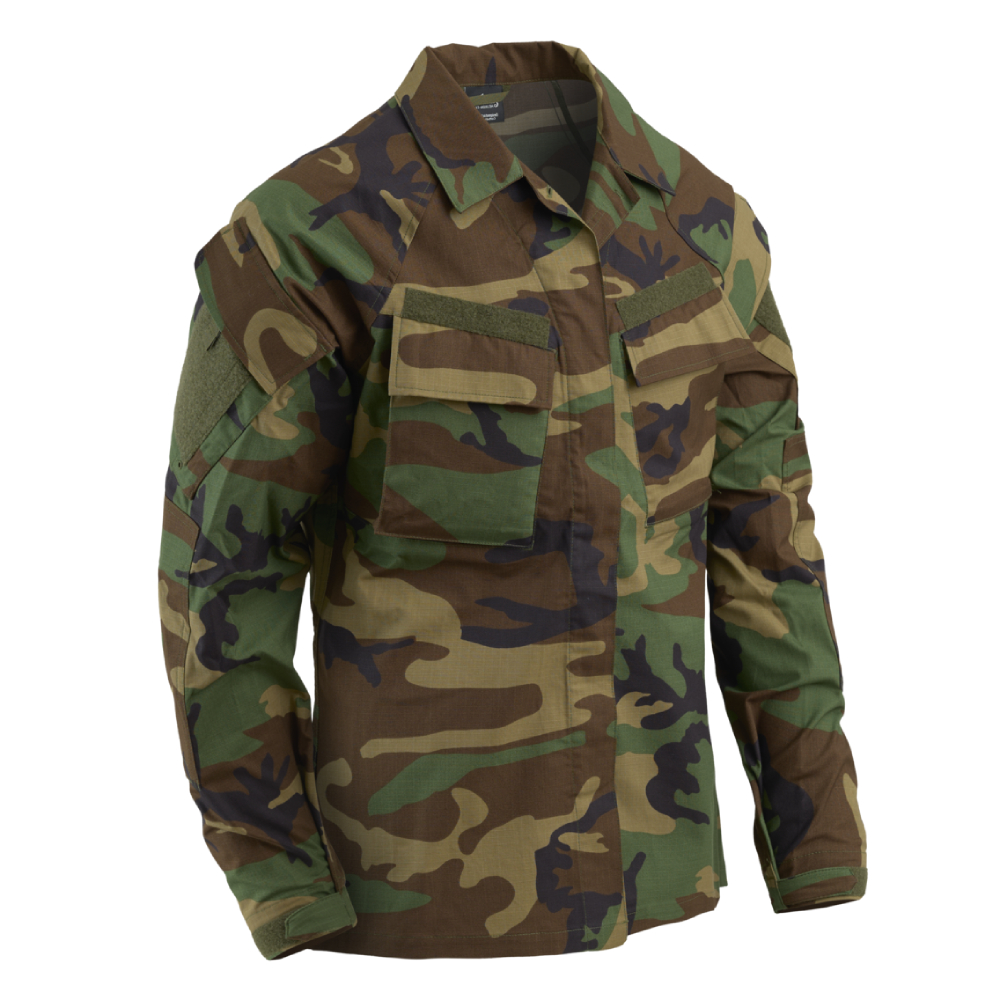
Design: Large-scale 4-color blotch (black, brown, green, khaki).
Scale design: Single-scale macro pattern — shapes were deliberately scaled up for long-range performance and to defeat night-vision optics, the classic tradeoff of that era: great from a distance, flatter up close.
Best environment: General temperate woodland — this is the pattern most people picture when they think of "camo," and for good reason. It's the direct predecessor to CCE below.
Current status: Phased out from frontline US service when it was replaced first by UCP, then by OCP (Scorpion W2), but still widely used by many other militaries and easily found on the commercial market.
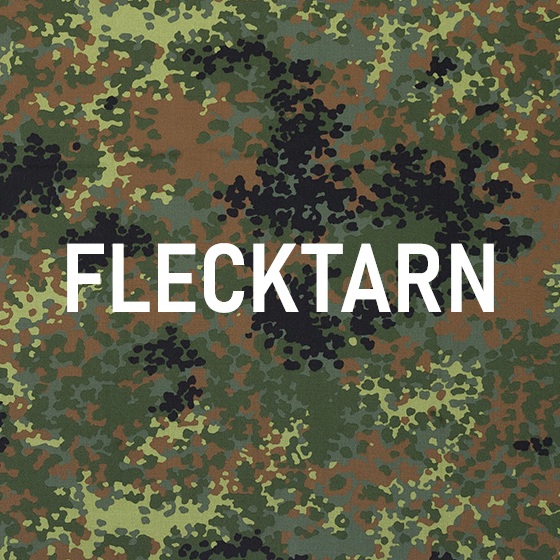
Flecktarn
Origins and history: Designed by the German company Marquardt & Schulz and selected among several candidate patterns tested during the Bundeswehr's "Truppenversuch 76" trials. The 5-color version (Flecktarn-B) was officially adopted on February 20, 1991, following German reunification.
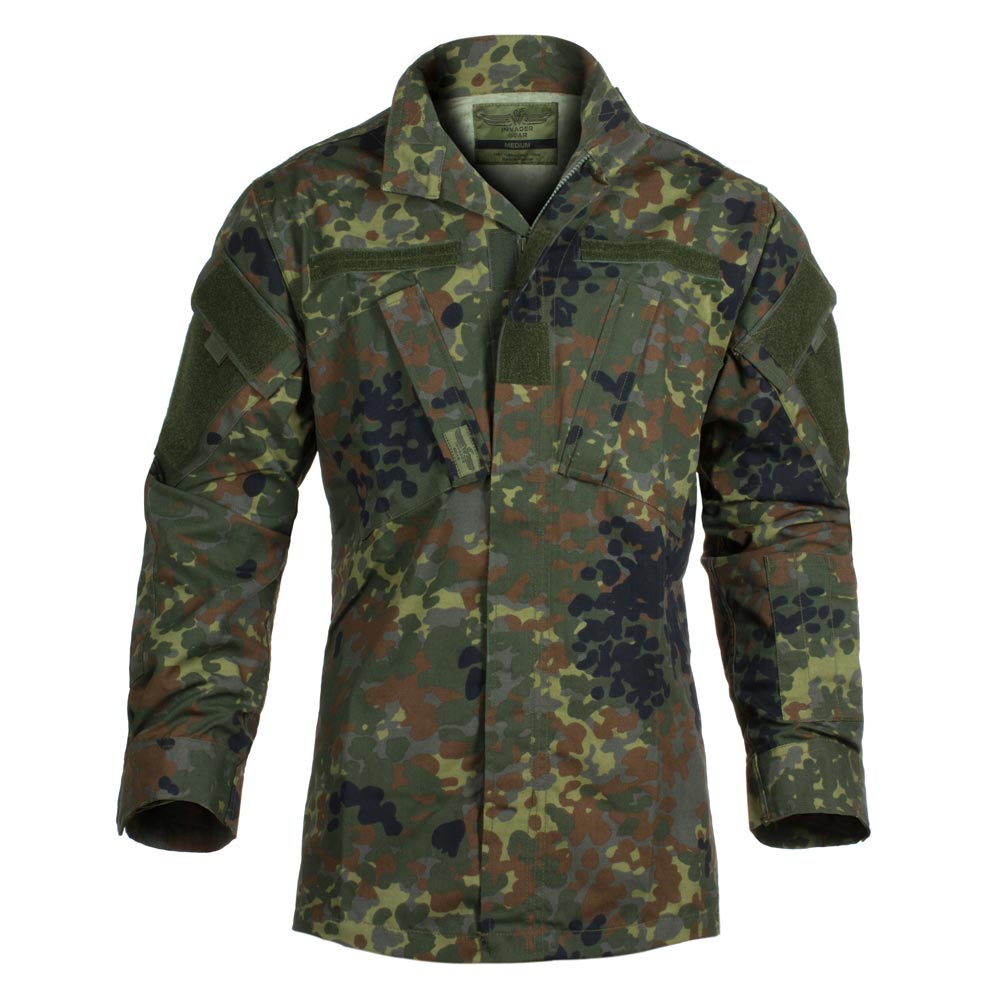
Design: 5-color spot pattern — 15% light green, 20% light olive, 35% dark green, 20% brown, 10% black. The name itself is literal: Fleck (spot) + Tarnung (camouflage).
Scale design: Truly dual-scale. The designers themselves describe it as combining small spots that provide a close-up "mimetic function" with clustered larger spots that create a long-distance "disruptive function" — an unusually deliberate two-tiered design for its time.
Best environment: Mixed and coniferous forests of Central Europe.
Current status: Active — remains the standard-issue pattern of the Bundeswehr (alongside the newer Multitarn for other roles). Flecktarn's spots-and-clusters concept directly influenced the Russian EMR/Digital Flora pattern below.
DPM (Disruptive Pattern Material)
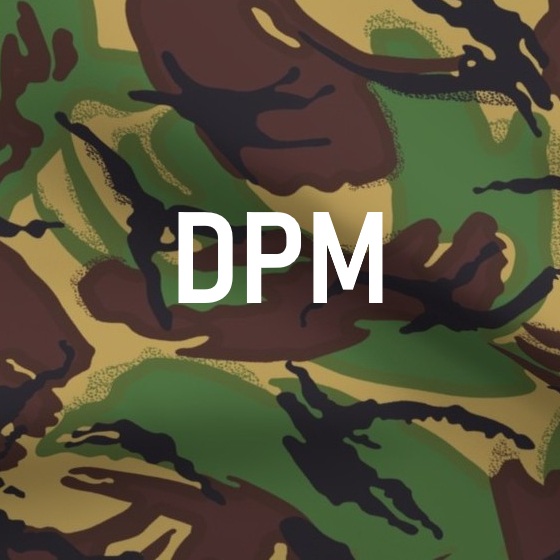
Origins and history: Developed by the British Armed Forces in the early 1960s using four temperate tones — black, dark brown, mid-green, and dark sand. It first appeared on a small scale on the 1963 Pattern windproof smock issued to special forces, expanded in 1966, and became formalized as the 1968 Pattern uniform. Britain was the first military to adopt a camouflage pattern as universal issue across all branches, and DPM was subsequently adopted or closely copied by numerous Commonwealth and former colonial forces.
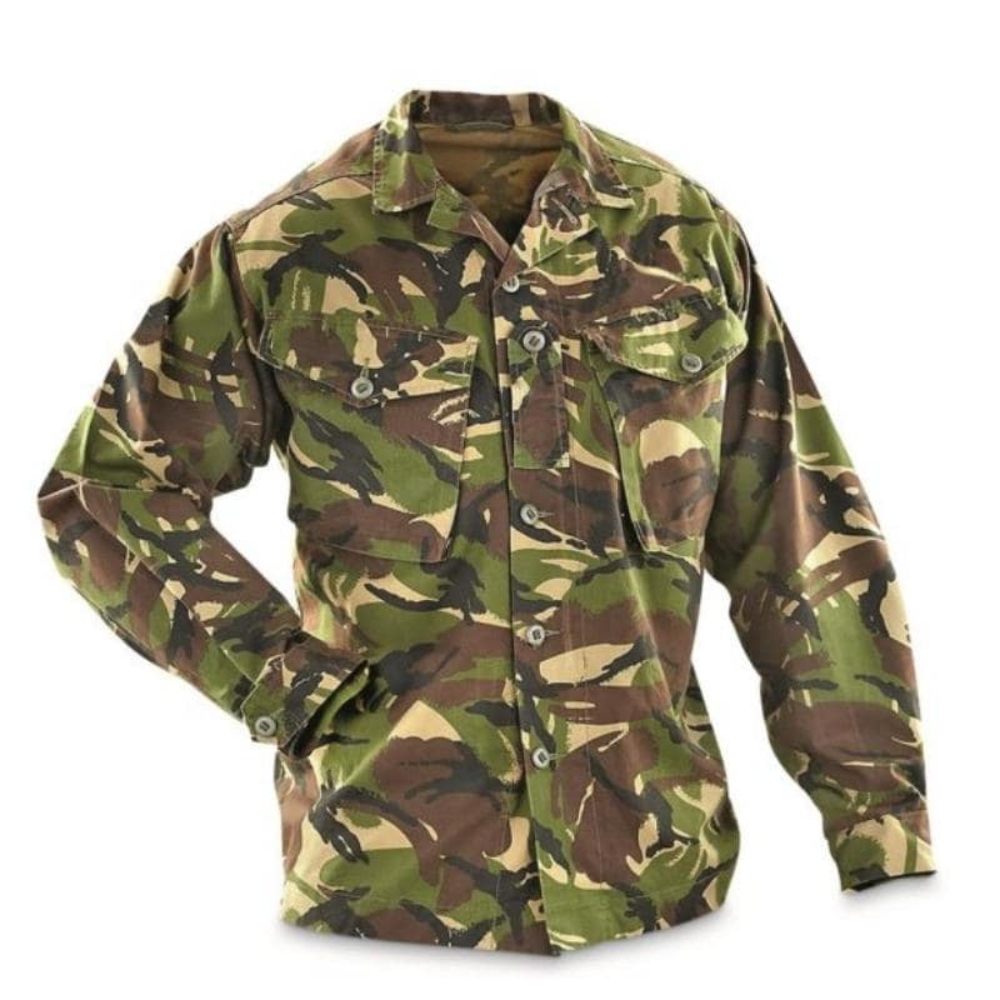
Design: Camouflage literature often refers to DPM as a "brushstroke" pattern, but this term points to its lineage — the WWII hand-painted Denison smock made with wide brushes — rather than its geometric shape. The actual shapes are large, irregular blotches (black, dark brown, mid-green, sand), which is why it belongs here rather than in the Brushstroke and Lizard family above.
Scale design: Single-scale macro/blotch pattern, in the same general family as Woodland, CCE, and Vegetato — without deliberate multi-scale engineering, which came decades later with work by Crye, DCS, and Hyde Definition.
Best environment: Temperate European woodland.
Current status: Legacy. Phased out by the British Armed Forces between 2010 and 2013 in favor of MTP, though it remains in service or influences domestic patterns in several other militaries worldwide.
Vegetato
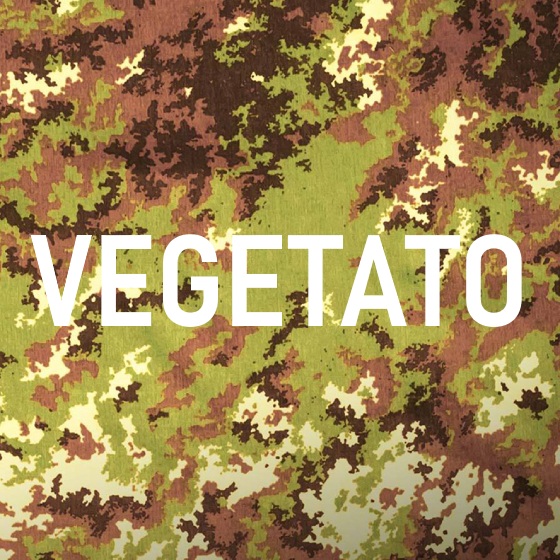
Origins and history: Adopted by the Italian Army in 2004, replacing the older Roma 90 pattern, which itself drew inspiration from US M81 Woodland. Vegetato was initially issued to paratroopers and special forces before seeing wider distribution.
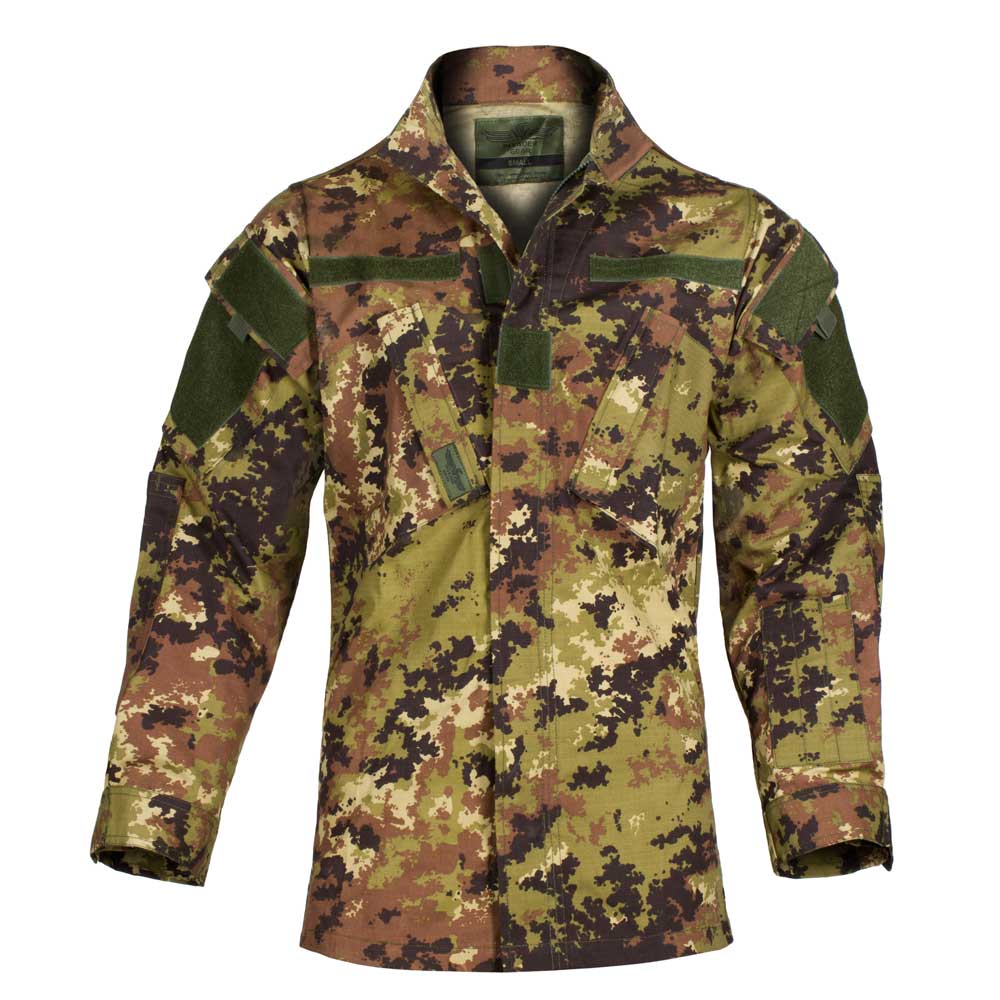
Design: Irregular blotches — chocolate brown, deep russet brown, and olive green — over a khaki base.
Scale design: Multi-scale fractal pattern, despite its blotchy, airbrushed look. Vegetato is a computer-generated pattern and is classified by camo researchers alongside MultiCam as a non-pixelated multi-scale design, effective both up close and at a distance.
Best environment: Mediterranean temperate woodland.
Current status: Active, standard pattern for the Italian Army and Air Force.
CCE (Camouflage Centre-Europe)
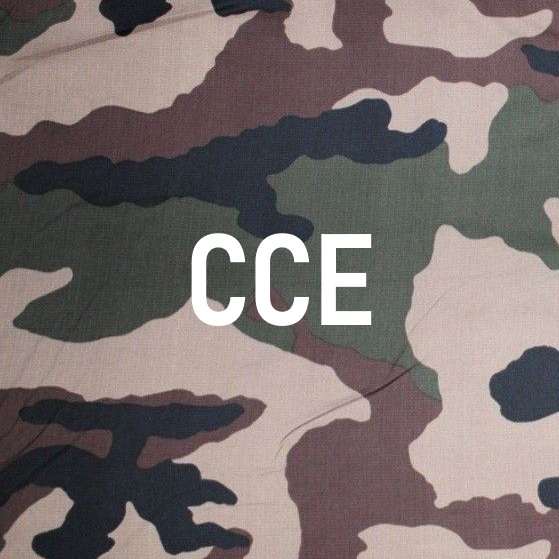
Origins and history: Introduced by the French Armed Forces in 1991 and fully adopted around 1994, replacing the older TAP47 pattern and plain khaki F2 uniforms. Its design is directly based on M81 Woodland, but features a different pattern layout and color balance. It was reportedly developed specifically around the summer foliage of the Fontainebleau forest.
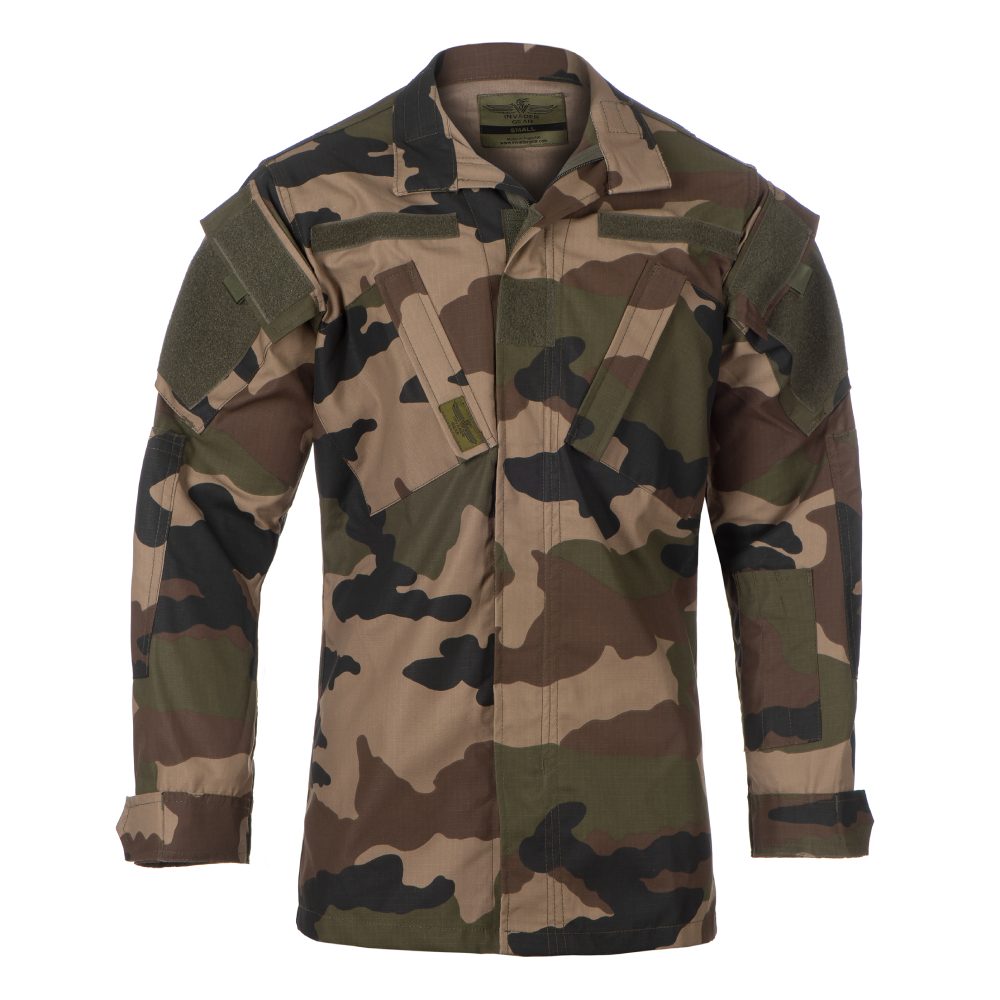
Design: Branch-like black shapes running across horizontal green, brown, and tan elements on a tan background — a heavier take on the Woodland formula.
Scale design: Single-scale macro pattern, leaning toward mid-to-long-range breakup at the cost of fine close-up detail.
Best environment: Temperate deciduous forest and open agricultural land in mainland Europe.
Current status: Legacy. As of 2024, the French military began replacing CCE with a MultiCam-derived pattern (BME - Bariolage Multi-Environnements).
The Digital and Multi-Scale Family
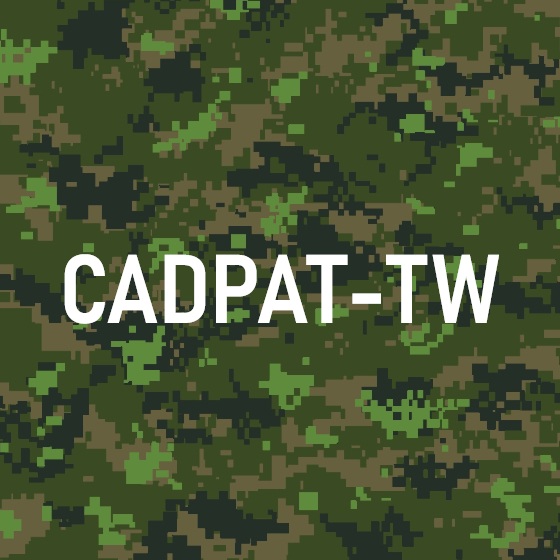
CADPAT (TW)
Origins and history: Developed by the Canadian Armed Forces under the "Clothe the Soldier" program, building on research dating back to the mid-1990s. Adopted by Land Force Command in 1997, though field trials and trademarking weren't completed until 2001; the Temperate Woodland (TW) variant became standard Army issue in 2002, with the Air Force following in 2004. CADPAT is widely recognized as the world's first operational digital (pixelated) camo pattern, directly inspiring the US Marine Corps' MARPAT below. A companion Arid Regions (AR) variant was created for desert deployments; this entry focuses specifically on TW.
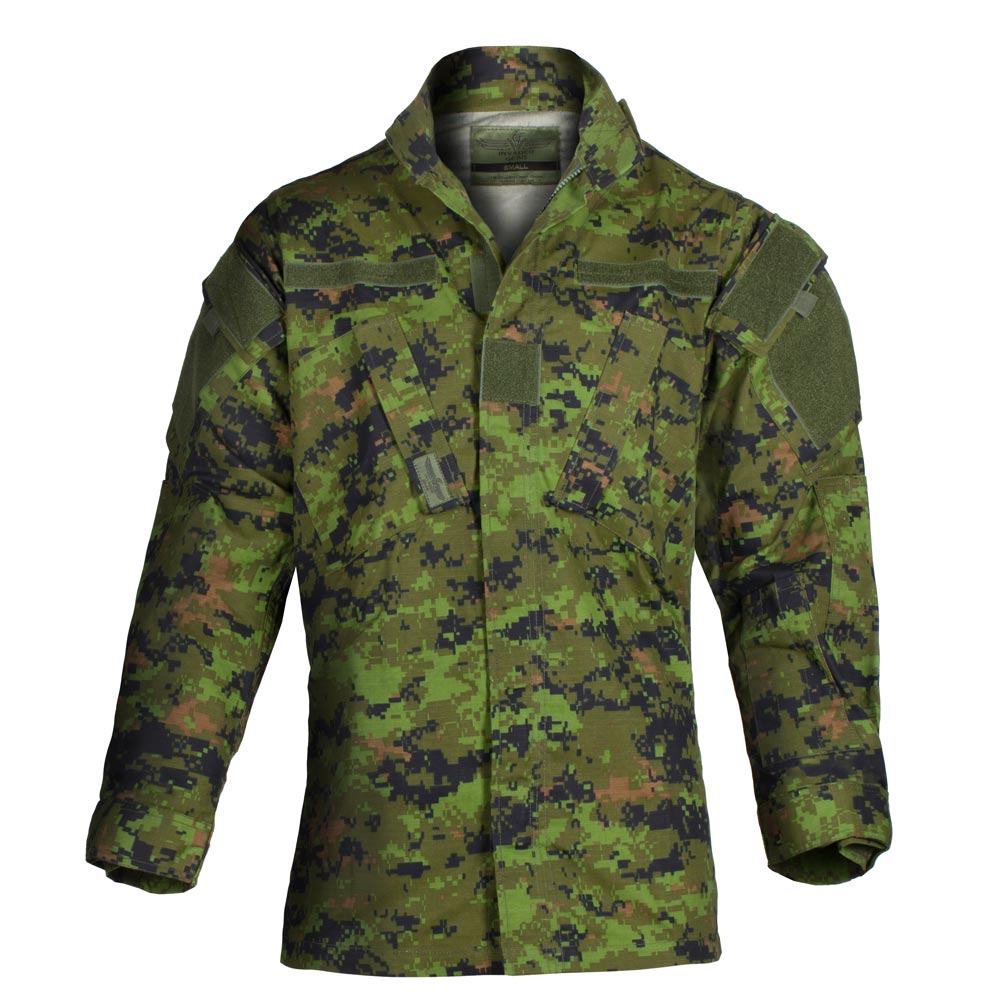
Design: 4-color digital pixel pattern — light green, dark green, brown, and black — engineered to be self-similar across two scales, with small pixel clusters forming larger macro color blocks.
Scale design: Multi-scale digital pixel, in the same class as MARPAT. CADPAT and MARPAT are often credited together as the first patterns to deliberately engineer this micro/macro pixel clustering effect.
Best environment: Temperate woodland
Current status: Legacy. Canada selected a new multi-terrain successor, CADPAT (MT), in 2021, with rollouts starting in 2024 over an estimated 24-month transition — CADPAT (MT) replaces both TW and AR with a single universal camo, echoing the move made by the US (OCP), the UK (MTP), and France (BME) across their forces.
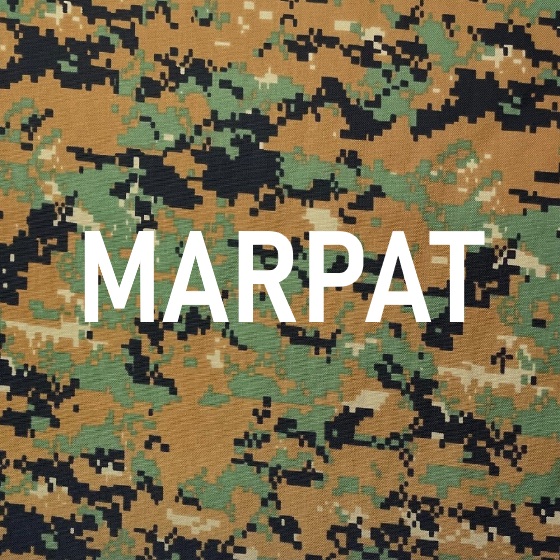
MARPAT (Woodland)
Origins and history: Designed in 2001 by a US Marine Corps development team (collaborating with scout snipers Kenneth Henley and John Heisterman), and fielded with the new Marine Corps Combat Utility Uniform between late 2002 and early 2005. It was directly influenced by Canadian CADPAT, which was adopted in 1997 as the world's first operational digital camo pattern. During development, the USMC team tested over 150 candidate patterns before narrowing them down to three finalists — two Tiger Stripe variants and an older Rhodesian brushstroke design — which they then re-engineered into a modern digital pixel structure. Woodland and Desert variants were adopted for general issue; a third, Urban, was developed but never fielded.
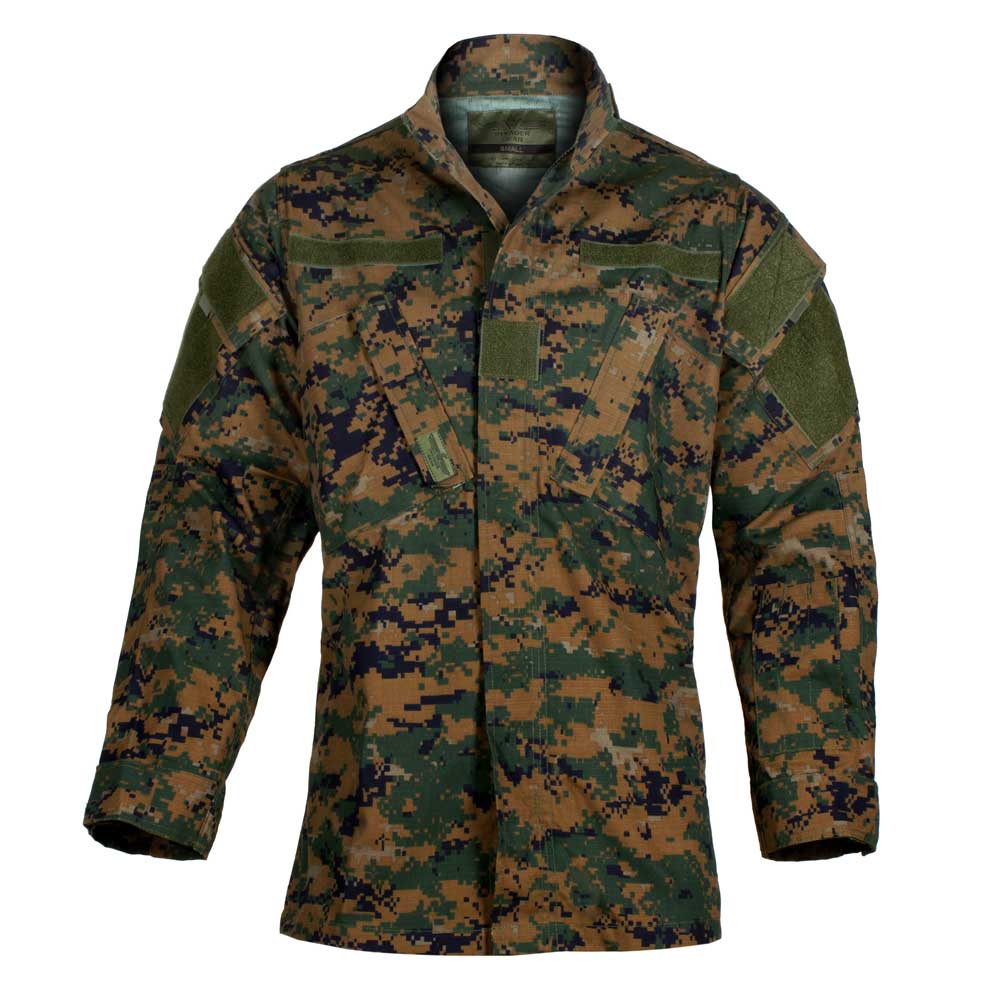
Design: Small rectangular color pixels forming two visual tiers — small pixel clusters that read as fine texture up close, and larger color zones (formed by those same clusters) that blend into terrain from afar.
Scale design: Multi-scale digital pixel. Along with CADPAT, MARPAT was among the first operational patterns to deliberately design for this micro/macro pixel clustering effect, pioneering and paving the way for the later three-tiered organic approach seen in A-TACS and PenCott.
Best environment: General temperate woodland
Current status: Active. MARPAT Woodland remains the standard-issue camouflage for US Marines.
EMR (Digital Flora)
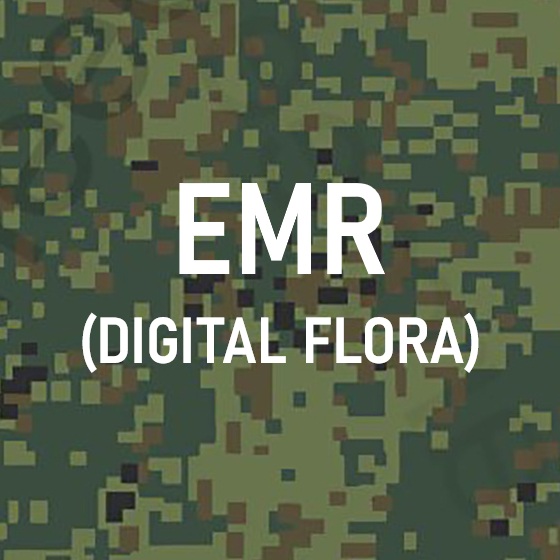
Origins and history: Developed starting in 2008 by the 15th Central Research Institute of the Russian Ministry of Defence and officially adopted in 2011, replacing the older analog "Flora" pattern. Its design drew inspiration from German Flecktarn, translating its small-spots/large-clusters logic into a digital, pixelated layout. EMR stands for Edinaya Maskirovochnaya Raskraska ("Unified Camouflage Pattern") — Digital Flora is an informal nickname referencing its predecessor.
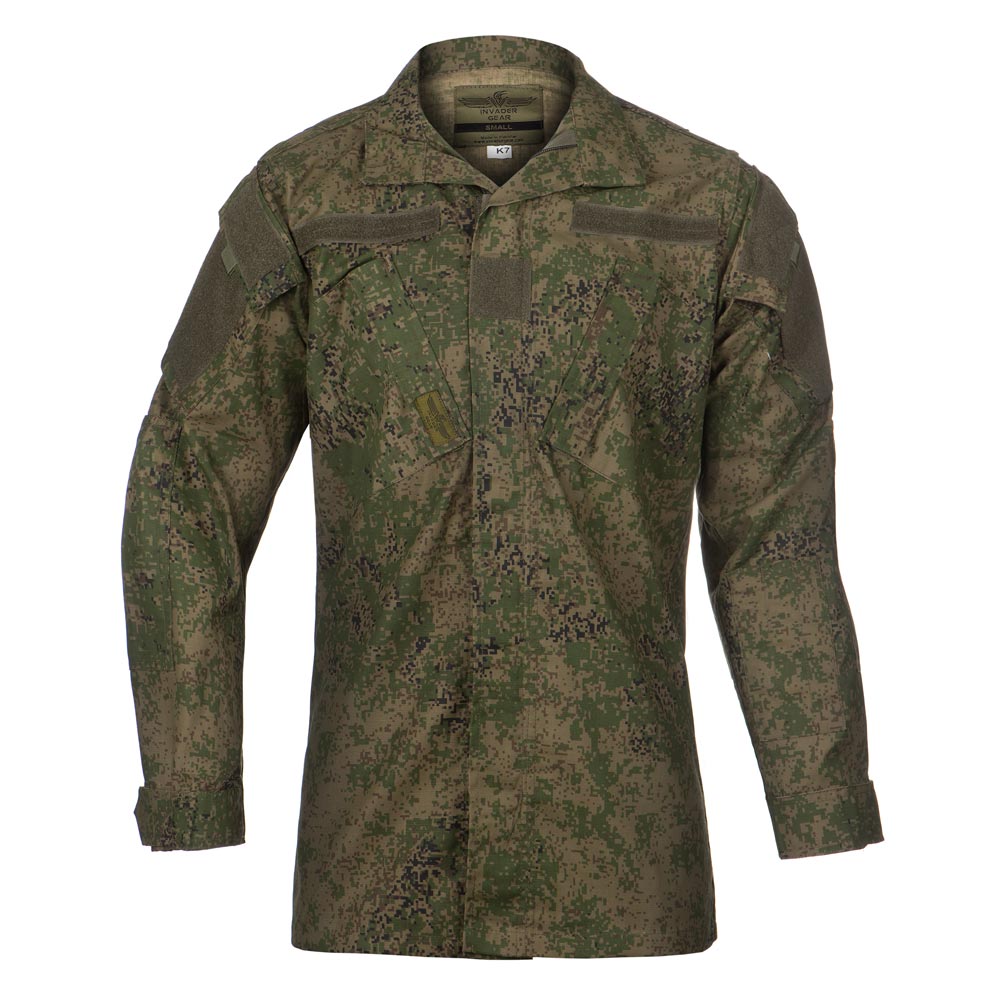
Design: Digital pixel pattern combining small spots (texture) with larger pixel clusters (macro breakup).
Scale design: Dual-scale, inherited directly from Flecktarn's mimetic/disruptive logic, but rendered as digital pixels instead of analog spots.
Best environment: Temperate and summer forest — the direct successor to Flora's woodland role. Dedicated EMR palettes also exist for arid and winter environments.
Current status: Active, standard issue for the Russian Armed Forces and used by several allied forces.
MultiCam
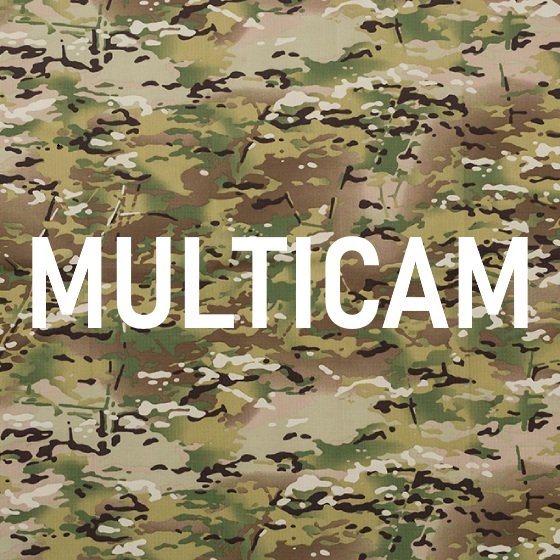
Origins and history: Developed by Crye Precision alongside the US Army Natick Soldier Systems Center in 2002 under the Objective Force Warrior program, originally known as "Scorpion." Crye tweaked the design for commercial trademarking and released it as MultiCam. The US Army evaluated it to replace 3-Color Desert and Woodland, but ultimately chose the Universal Camouflage Pattern (UCP) in 2004 — MultiCam remained in limited use by special forces in Iraq and Afghanistan through the mid-to-late 2000s.
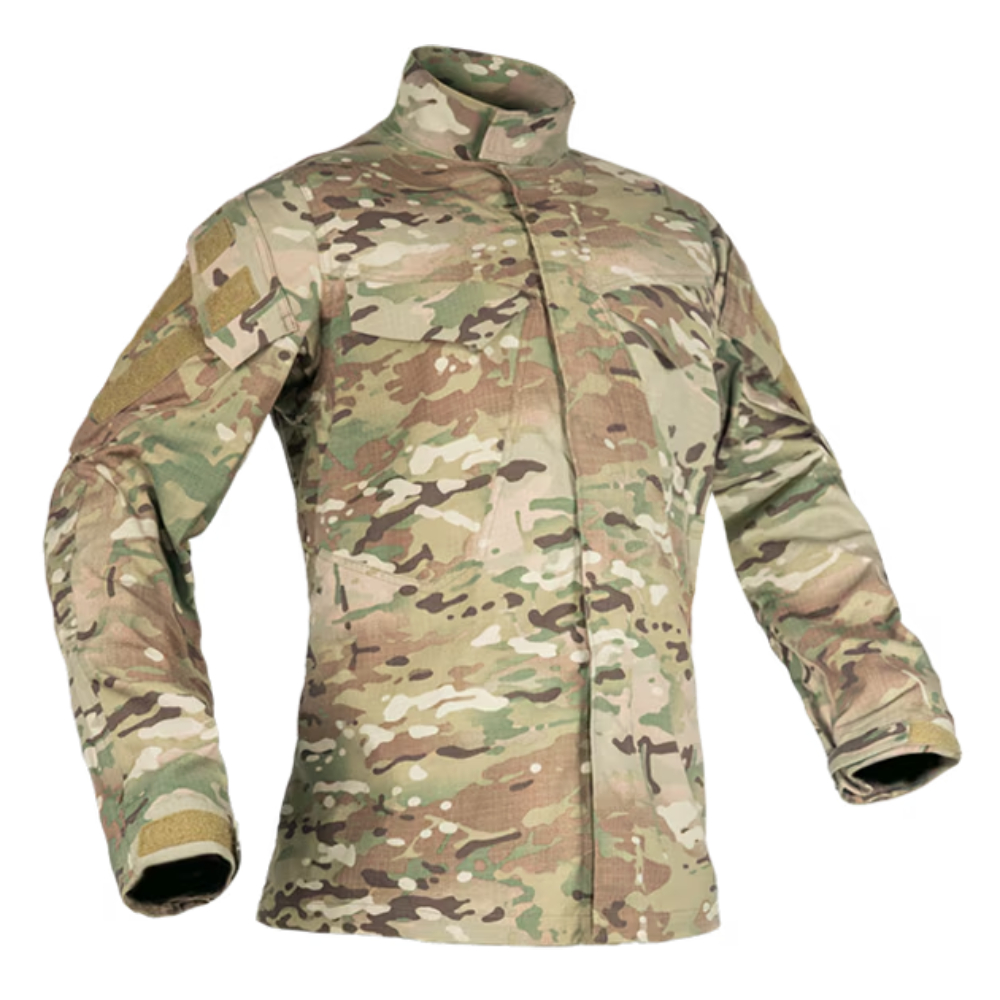
Design: 7-color, multi-scale pattern featuring blended gradient shapes instead of hard spots or sharp pixels.
Scale design: Multi-scale — macro elements for long-range silhouette disruption, subtle micro detail for blending up close. This soft-gradient approach is why MultiCam avoids the harsh "blocky" look of flat digital patterns when viewed up close.
Best environment: MultiCam was built as an all-round, multi-environment pattern rather than a dedicated woodland camo. It holds up well in lush green forests and performs great in transitional terrain (scrubland, dried grass, forest edges), though dedicated woodland patterns will outperform it in deep green woods.
Current status: Active. MultiCam is widely fielded across NATO and allied forces, particularly by special forces units.
MultiCam Tropic
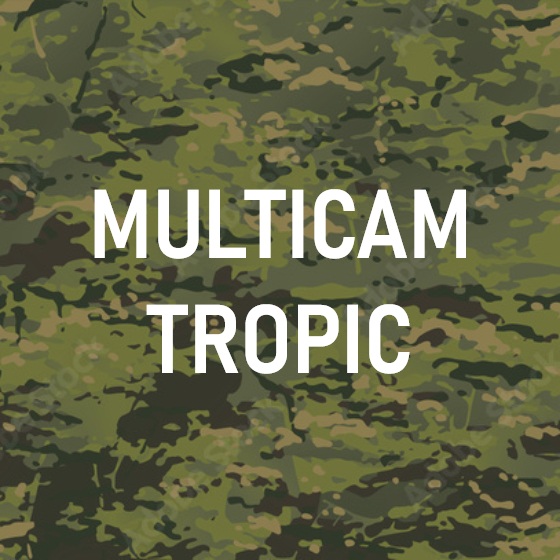
Origins and history: Released by Crye Precision in November 2013 alongside three other MultiCam variants (Arid, Alpine, Black) as specialized solutions for specific operating environments.
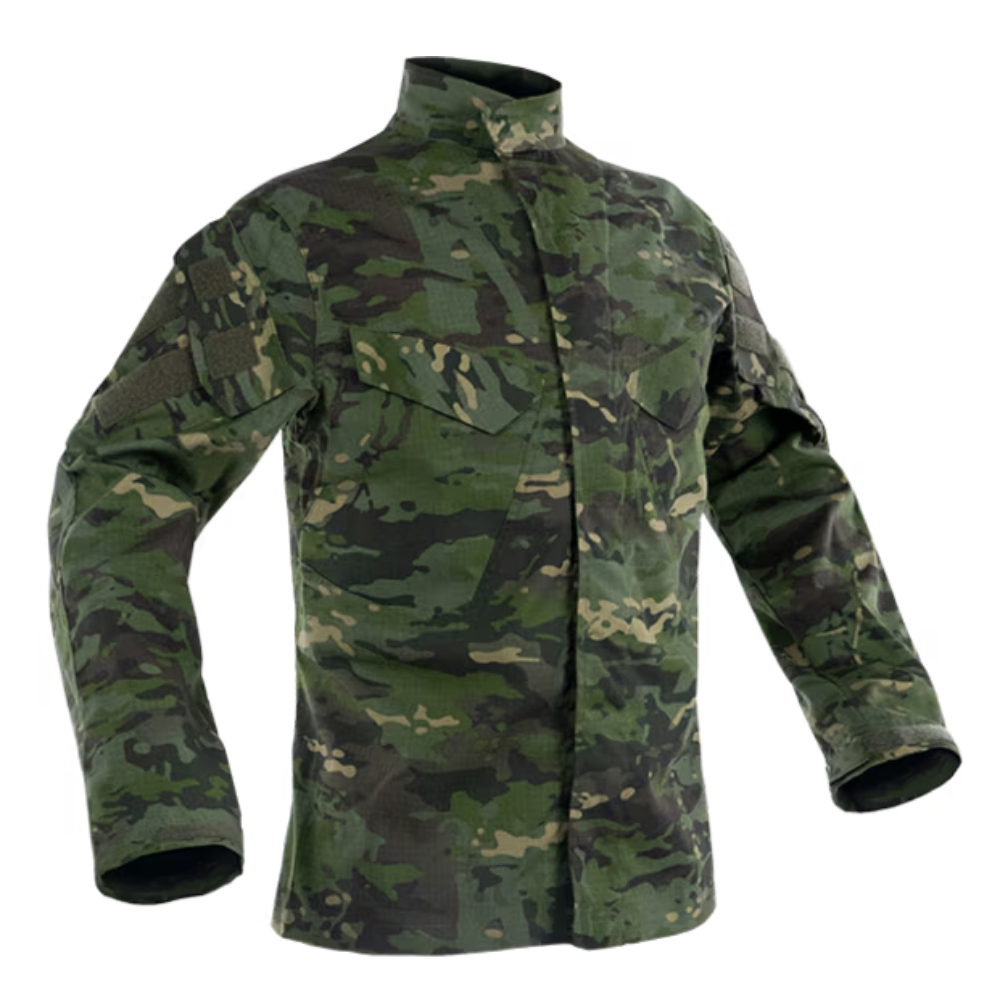
Design: Identical geometry to standard MultiCam, but with a greener, higher-contrast palette.
Scale design: Same multi-scale, blended-gradient geometry as base MultiCam.
Best environment: Specifically designed for lush green environments — tropical jungle, river valleys, and wetlands, as well as European deciduous and mixed forests during spring and summer. Where standard MultiCam makes compromises across diverse settings, Tropic is built to excel in lush terrain.
Current status: Commercial and allied military use; not standard US issue, but widely adopted by various special operations units and allied militaries operating in these environments.
MTP (Multi-Terrain Pattern)
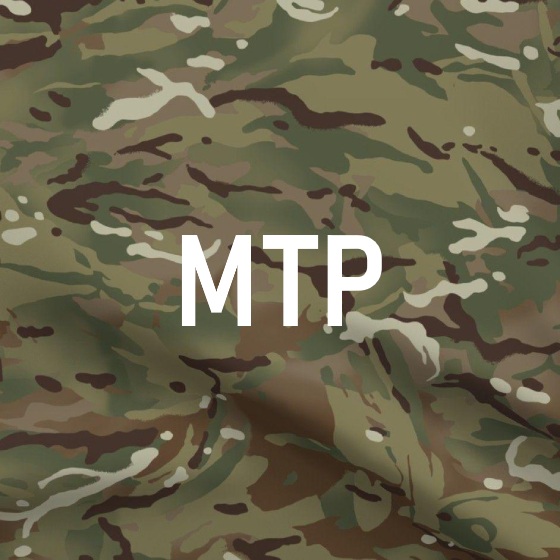
Origins and history: Commissioned by the UK Ministry of Defence and designed by Crye Precision, MTP was first issued to troops deploying to Afghanistan under Operation Herrick in March 2010. It rolled out across the entire British Army by 2011, fully replacing DPM by 2013. Crye engineered MTP using MultiCam's color science and technology, but reshaped the pattern elements to echo the swirled outlines of outgoing DPM, easing the transition for troops accustomed to DPM's disruptive profile. The UK MoD owns the license for the print.
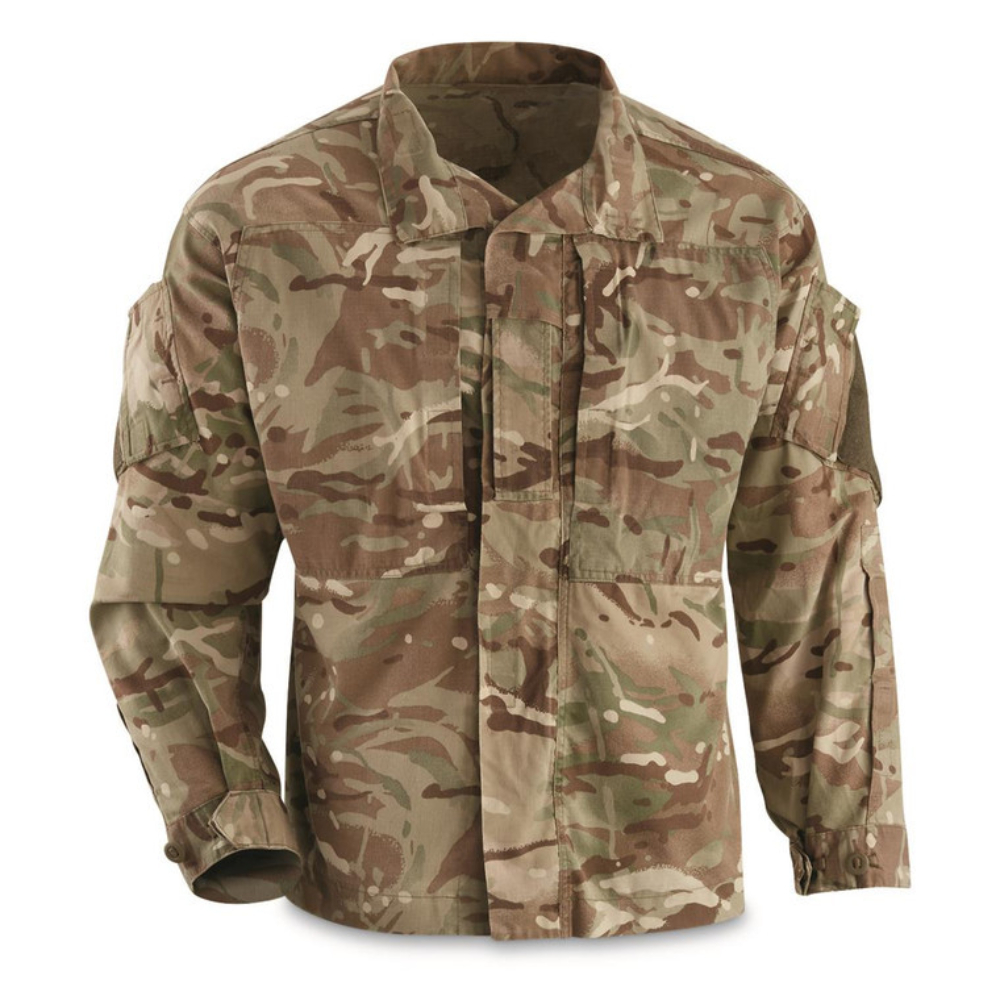
Design: Multi-scale, blended-edge pattern derived from MultiCam, with shapes tweaked to mimic the blotchy aesthetic of DPM rather than MultiCam's softer gradients.
Scale design: Multi-scale, borrowing directly from Crye's macro-for-distance, micro-for-close-range blending architecture.
Best environment: Fair is fair, and the same goes for MTP as it does for MultiCam — it was created as a true multi-terrain generalist pattern for the varied environments British troops deploy to, not as a dedicated woodland camo. It performs well in green woods, but it's not dialed in for deep forest like MultiCam Tropic or PenCott WildWood.
Current status: Active — standard issue for the British Armed Forces
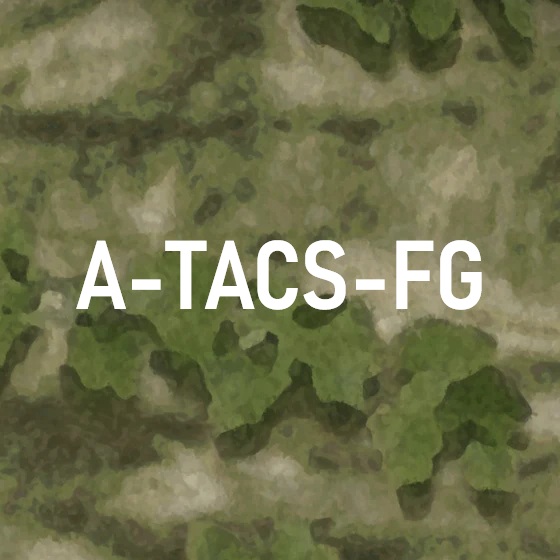
A-TACS FG
Origins and history: Developed by Digital Concealment Systems (DCS), with the A-TACS family introduced between 2007 and 2009 and the Foliage Green (FG) variant hitting the market in 2011. The original "legacy" lineup was phased out in 2018 for DCS's newer "X" series, but popular demand brought FG back in 2022.
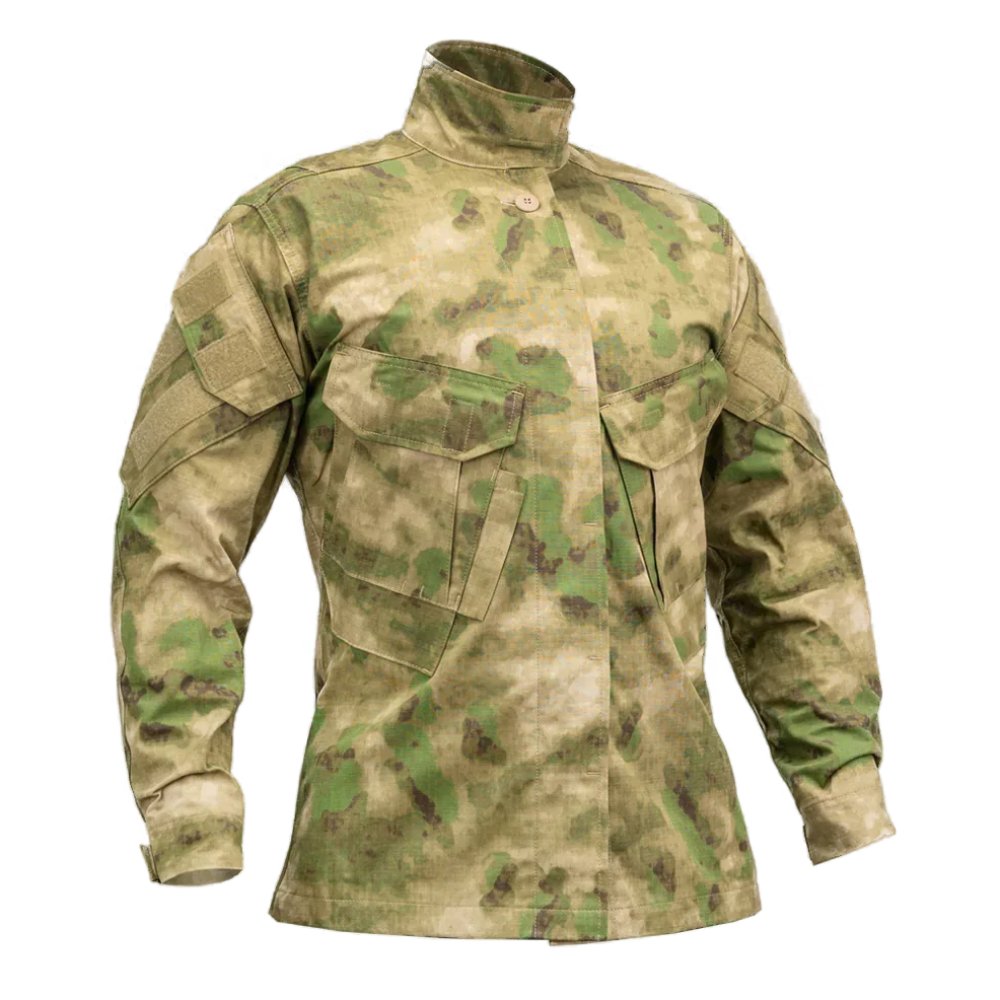
Design: Organic pixel shapes instead of hard square blocks — DCS calls it a "pattern within a pattern," engineered to prevent the "blobbing" effect that flat digital camos suffer from at a distance.
Scale design: Three-level fractal nesting — small clusters build medium shapes, which in turn form macro silhouettes. A-TACS was developed with snipers in mind and is marketed as performing best at 50–300 meters, a longer engagement distance than most patterns on this list.
Best environment: Temperate forest and transitional green terrain.
Current status: Commercial, with adoption by select military units and law enforcement agencies. Not a standard national issue pattern.
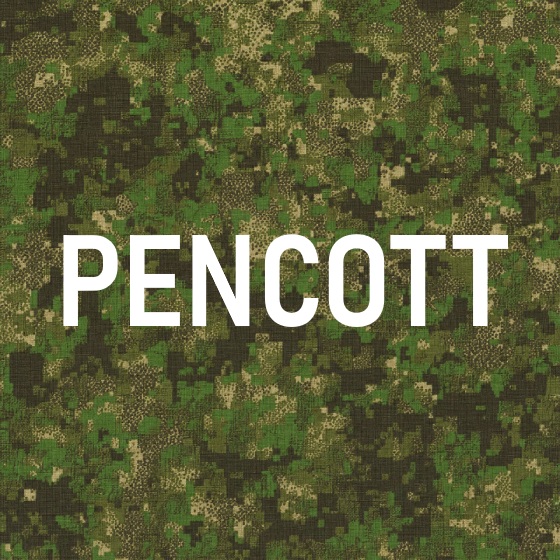
PenCott WildWood
Origins and history: Developed by the UK's Hyde Definition (founded by Dominic Hyde) and released in 2017, reportedly at the request of Polish Special Forces and in close collaboration with Helikon-Tex.
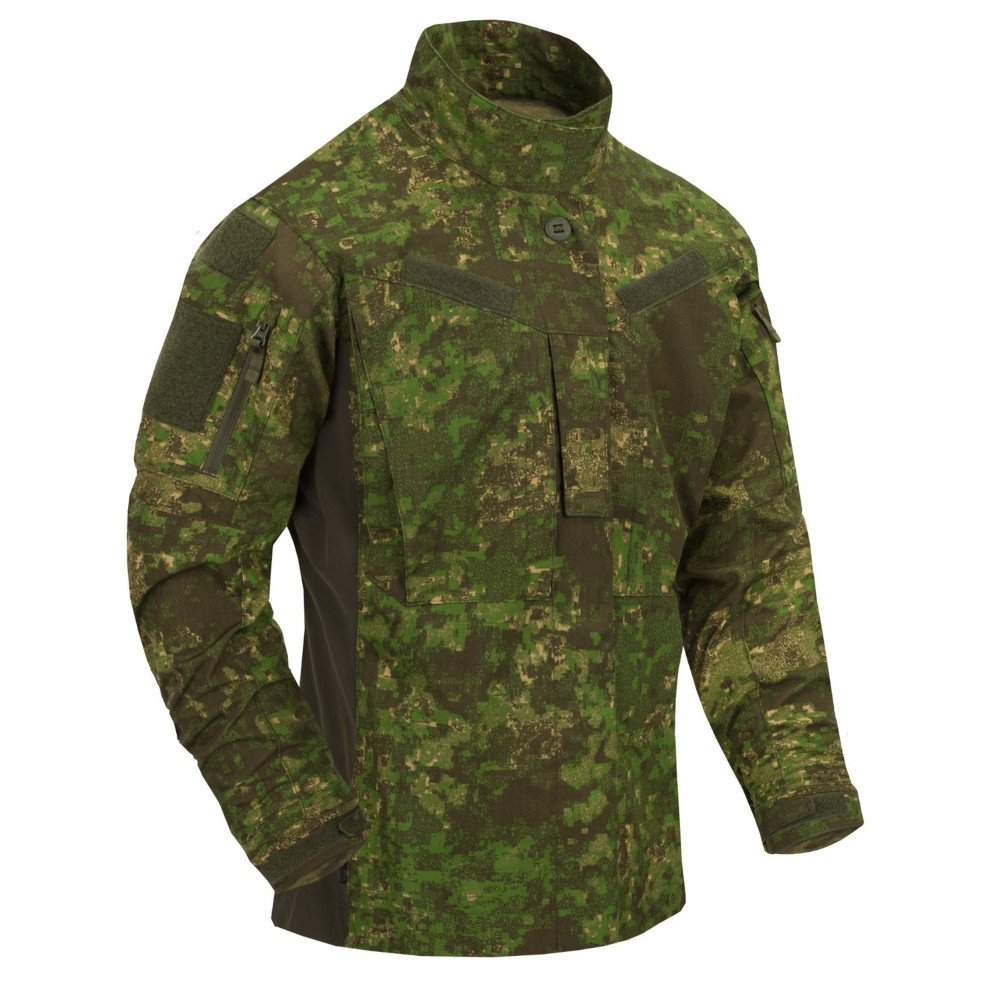
Design: Multi-scale, digital/organic hybrid pattern combining micro-texture and macro-shapes, sitting in the same design family as A-TACS but with its own distinct color palette.
Scale design: Three-level fractal combining micro, medium, and macro elements within a single print — purposefully marketed to stay effective up close, at mid-range, and at long distances, rather than specializing in just one.
Best environment: Temperate woodland and grassland across Central and Eastern Europe.
Current status: Commercial, used by various special operations units worldwide.
Comparison Table
Country | Year | Design | Distance | Environment | Status | |
|---|---|---|---|---|---|---|
| USA | 2002 | Multi-scale | Close - Far | Transitional | Active |
| USA | 2002 | Multi-scale | Close - Far | Green & | Mainly |
| United | 2010 | Multi-scale | Close - Far | Transitional | Active |
| USA | 2011 | Organic | 3-tier fractal | Temperate & | Mainly |
| Germany | 1990-91 | 5-color | Close - Far | Central | Active |
| Greece | Mid- | Overlapping stripes | Close | Dry | Active |
| United | 2017 | Multi-scale | Close - mid - | Temperate | Mainly |
| South | 1957 - 1962 | Overlapping | Close | Dense tropical | Historical - |
| USA | 1981 | Large-scale | Mid - Far | Temperate forest | Active |
| Canada | 1997 | Digital pixel | Close - Far | Temperate forest | Active |
| USA | 2001 | Digital pixel | Close - Far | Temperate forest | Active |
| Russia | 2008 | Digital pixel | Close - Far | Temperate / summer forest | Active |
| Italy | 2004 | Irregular blotches | Close - Far | Mediterranean, Temperate | Active |
| France | 1991 | Large-scale | Mid - Far | Temperate deciduous | Active |
| United | 1960s | 4-color blotch | Mid - Far | Temperate European | Active |
Which one takes the crown?
No single camouflage wins everywhere. Your choice comes down to where you're operating and the demands of your mission. That assumes you have the freedom to choose in the first place — especially for professionals, where gear regulations usually dictate what you can and can't wear.
Sources
Camouflage Central-Europe — Wikipedia: https://en.wikipedia.org/wiki/Camouflage_Central-Europe
France — Camopedia: https://www.camopedia.org/index.php/France
MultiCam — Wikipedia: https://en.wikipedia.org/wiki/MultiCam
Crye Precision — Wikipedia: https://en.wikipedia.org/wiki/Crye_Precision
MultiCam Tropic — Crye Precision: https://www.cryeprecision.com/custitem_psgss_product_color/MultiCam-Tropic
Crye Precision Releases New MultiCam Patterns — Soldier Systems Daily: https://soldiersystems.net/2013/11/26/crye-precision-releases-new-multicam-patterns-and-reinvents-website/
A-TACS — Camopedia: https://www.camopedia.org/index.php/A-TACS
Original A-TACS FG Is Back — Soldier Systems Daily: https://soldiersystems.net/2022/07/27/original-atacs-fg-camouflage-is-back/
What Is The A-TACS Pattern And When It Actually Works Best — Vancharli Outdoor: https://vancharlioutdoor.com/blog/what-is-the-a-tacs-pattern-and-when-it-actually-works-best/
Mastering Camouflage: A Deep Dive into A-TACS Patterns — AET Gear: https://www.aetgear.com/mastering-camouflage-a-deep-dive-into-a-tacs-patterns/
Flecktarn — Wikipedia: https://en.wikipedia.org/wiki/Flecktarn
Germany — Camopedia: https://www.camopedia.org/index.php/Germany
Flecktarn — Camopedia: https://www.camopedia.org/index.php/Flecktarn
The Psychology of Camouflage: How Flecktarn Disrupts Visual Perception — GoMilitar: https://www.gomilitar.com/blogs/useful-information/the-psychology-of-camouflage-how-flecktarn-disrupts-visual-perception
Greece — Camopedia: https://www.camopedia.org/index.php/Greece
New M24 Greek Lizard Pattern — Joint Forces News: https://www.joint-forces.com/kit-camo/84549-new-m24-greek-lizard-pattern-a-brief-glimpse
Lizard (camouflage) — Wikipedia: https://en.wikipedia.org/wiki/Lizard_(camouflage)
PenCott — Camopedia: https://www.camopedia.org/index.php/PenCott
About PenCott — pencottcamo.com: https://www.pencottcamo.com/about/
IWA — Two New Patterns Join PenCott Camo Family: Wildwood and MetroPolis — Soldier Systems Daily: https://soldiersystems.net/2017/03/02/iwa-two-new-patterns-join-pencott-camo-family-of-patterns-wildwood-and-metropolis/
PenCott GreenZone Camo — Kula Tactical: https://kula-tactical.com/military-camouflage-patterns/all-pencott-camo-patterns/pencott-greenzone-camo
Tiger stripe — Camopedia: https://www.camopedia.org/index.php/Tiger_stripe
Tiger stripe camouflage — Wikipedia: https://en.wikipedia.org/wiki/Tiger_stripe_camouflage
A Brief History of M81 Woodland Camouflage — Soldier Systems Daily: https://soldiersystems.net/2025/02/15/a-brief-history-of-m81-woodland-camouflage/
U.S. Woodland — Wikipedia: https://en.wikipedia.org/wiki/U.S._Woodland
EMR camouflage — Wikipedia: https://en.wikipedia.org/wiki/EMR_camouflage
Russia — Camopedia: https://www.camopedia.org/index.php/Russia
Italy — Camopedia: https://www.camopedia.org/index.php/Italy
Telo mimetico — Wikipedia: https://en.wikipedia.org/wiki/Telo_mimetico
Understanding Camo: Micro and Macro Patterns — GunSkins: https://www.gunskins.com/blogs/the-wrap/understanding-camo-micro-and-macro-patterns
Camouflage Patterns: The Art and Science Behind Tactical Concealment — UF PRO: https://ufpro.com/us/blog/camouflage-patterns-tactical-concealment
MARPAT — Wikipedia: https://en.wikipedia.org/wiki/MARPAT
MARPAT — Camopedia: https://www.camopedia.org/index.php/MARPAT