
Blog
Fixed Blade or Folding Knife: Choose the Right One

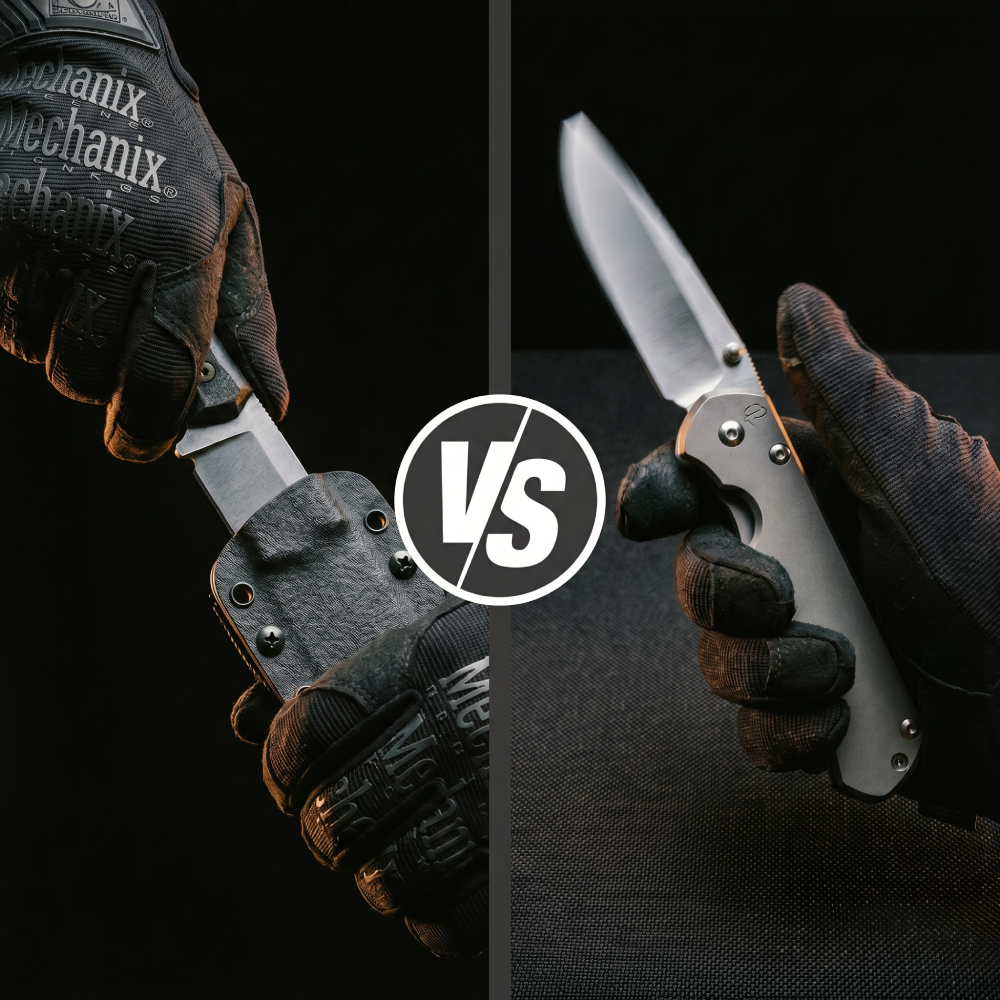
"Should I get a fixed blade or a folding knife?" is one of the most common questions we get—and there's no single right answer. There is only the right answer based on your specific needs. A bushcraft survival knife and an EDC pocket knife solve completely different problems, even if they seem to fall under the same product category.
This guide explains the fundamental differences in durability and design, breaks down the most common locking mechanisms for pocket knives, covers the legal framework in Greece as clearly as possible, and concludes with specific recommendations for each use—military/police, airsoft, tactical, hunting/fishing, and everyday carry.
The Core Difference: Construction and Durability
A fixed blade knife has no moving parts. The blade and handle are one continuous piece of metal (or the blade extends into the handle as a tang), without a locking mechanism that could eventually fail. This makes it inherently more durable for heavy-duty tasks—batoning, prying, and heavy impact work.
A folding knife relies on a pivot and a locking mechanism. No matter how good the lock is, it remains a potential point of failure that a fixed blade simply doesn't have. That doesn't mean folding knives are unreliable—it just means their durability depends much more heavily on build quality.
Tang: The Hidden Factor in Fixed Blades
With fixed blades, the type of tang (the part of the blade extending into the handle) largely dictates overall strength:
- Full tang: The steel extends through the full length and width of the handle, usually visible on both sides. Offers maximum resistance to lateral stress and heavy impacts. The preferred choice for tactical, survival, and combat knives.
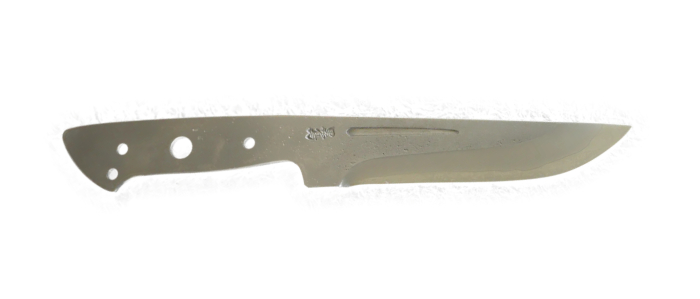
- Partial or rat-tail tang: The steel extends only partially or narrows down significantly inside the handle. It's lighter, but far more prone to snapping at the blade-handle junction under heavy loads.
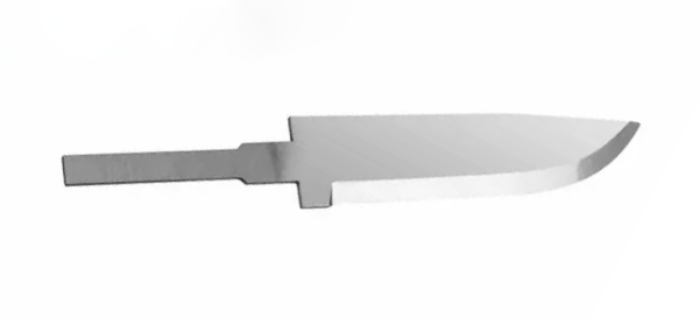
- Half tang: The steel extends roughly halfway down the handle at full width and thickness. It provides better strength than a partial/rat-tail tang, though it doesn't match the rock-solid stability of a full tang since the rear half of the handle has no internal metal support. Commonly found in general-purpose utility knives where weight and balance matter, but not recommended for heavy abuse.
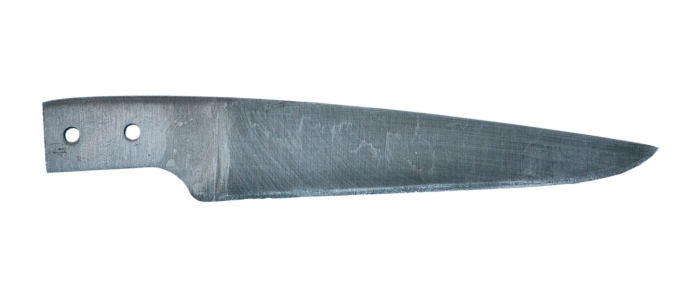
If you plan to use your knife for anything beyond light cutting tasks, a full tang isn't a luxury—it's an absolute must.
Locking Mechanisms on Folding Knives
The reliability of a folding knife is largely determined by its blade locking mechanism. The most common types include:
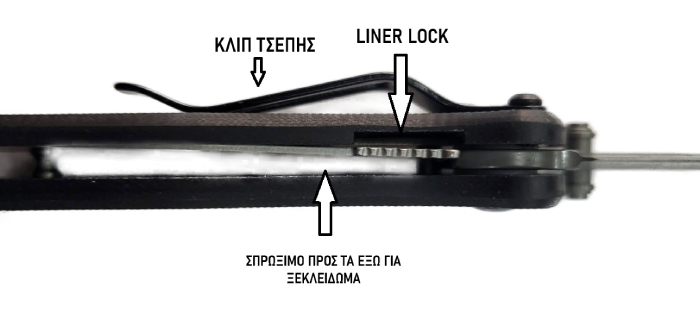
Liner Lock — A thin spring leaf inside the handle snaps behind the blade's tang when opened, locking it in place. It's the most widely used lock on mid-range folding knives—simple, cost-effective to produce, and easy to operate one-handed. Downside: the leaf can wear down over time, and on some models your index finger sits close to the release tab, requiring careful handling.
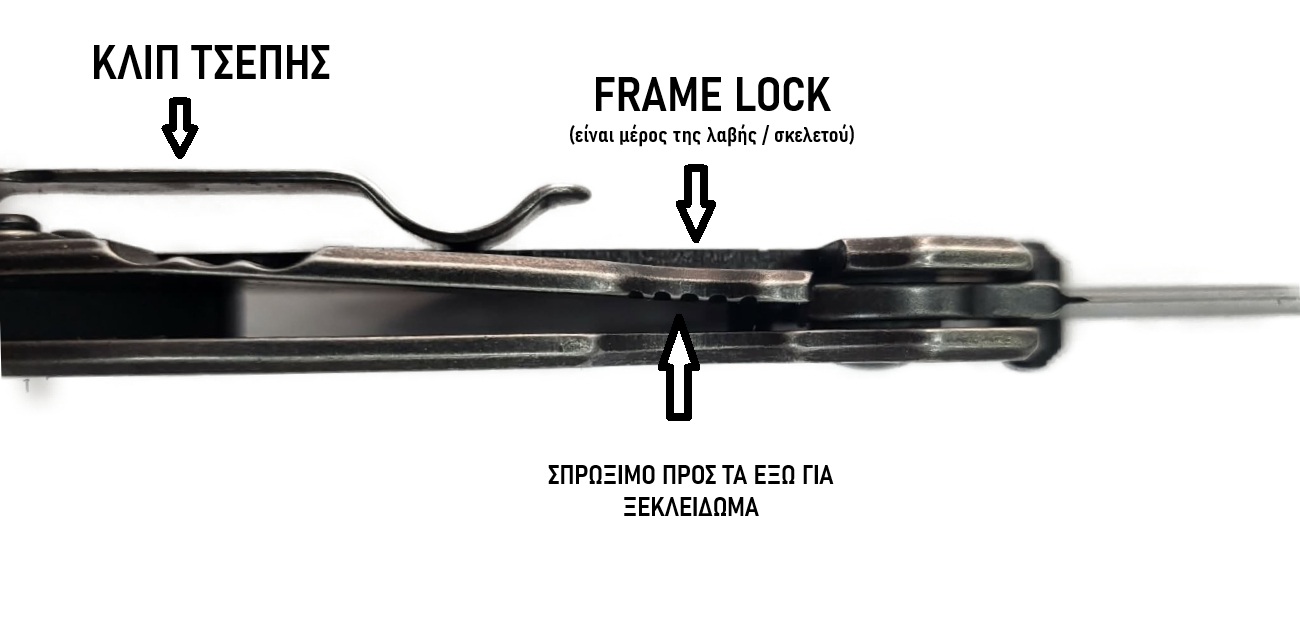
Frame Lock — Essentially a beefed-up version of the liner lock, where the handle frame itself (often titanium) springs and locks directly behind the tang, rather than using a separate internal liner. Pioneered by Chris Reeve and also known as the Reeve Integral Lock. Because it uses thicker material, it is generally considered sturdier than a liner lock in stress tests, though real-world performance always depends on individual build quality.
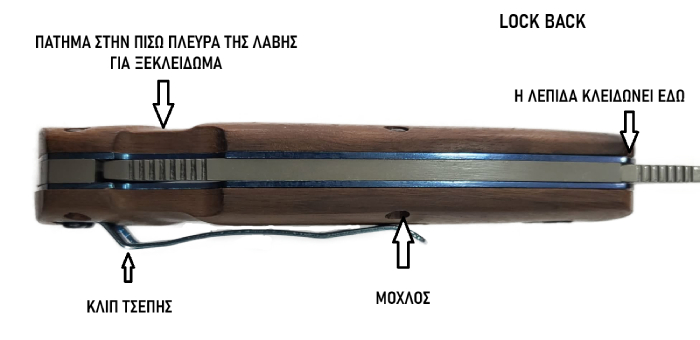
Lockback (Back Lock) — A steel spine along the back of the handle drops into a notch on the blade's tang when opened. To close the knife, you depress the rocker bar at the back of the handle. Considered one of the sturdiest and most reliable designs—your fingers never cross the blade's path when closing it, making it safer to operate. Downside: one-handed closing is significantly trickier compared to a liner or frame lock.
Crossbar / AXIS-type Lock — A spring-loaded transverse bar locks the blade firmly in place and releases by pulling back on dual thumb studs on either side of the handle. Advantage: completely ambidextrous, works seamlessly with gloves, and keeps your fingers well clear of the blade path. A go-to choice for tactical folding knives for precisely these reasons.
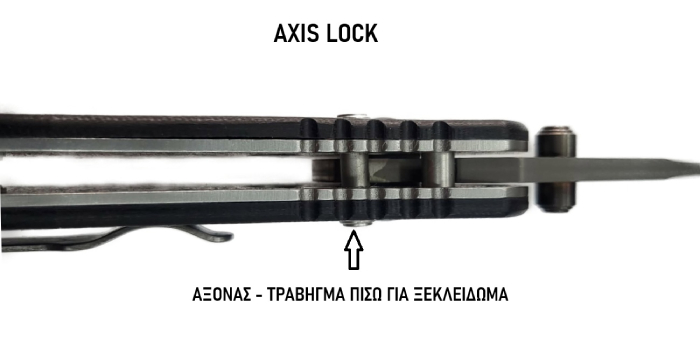
Which one is "the best"? There is no absolute hierarchy that applies across the board—a well-made liner lock will easily outperform a poorly built frame lock. As a general rule, however, lockbacks and crossbar-style locks are considered tougher for heavy-duty tasks, while liner locks and frame locks deliver fast, effortless one-handed deployment.
Legal Framework in Greece: What You Need to Know
Knife ownership and carry in Greece are governed by Law 2168/1993 on weapons (as amended), and the rules aren't as black-and-white as you might think. Based on available sources:
- Knives justified for domestic, professional, educational, artistic, hunting, fishing, or related outdoor activities are generally exempt from general weapons restrictions.
- A commonly cited, unofficial benchmark is a 12 cm blade length as a "safe" limit for everyday carry without specific justification—however, this is not explicitly codified as a legal maximum in the legal texts we reviewed.
- Automatic-opening knives (switchblades / OTFs) and daggers/stilettos face significantly stricter legal scrutiny.
- Carrying a knife without a clear, justified reason (e.g. simply "just in case") will not hold up during a police check. Context also matters tremendously. Being found with a bushcraft knife in the mountains is completely different from getting stopped with a machete in Syntagma Square.
- The final call during a stop rests largely with the inspecting police officers and, if necessary, the courts.
Important note: this does not constitute legal advice, and the sources supporting these guidelines are primarily informational articles, not official statutory interpretations. If you need a definitive answer for a specific scenario (e.g. professional carry, vehicle transport, or job-related use), please consult the relevant police authorities or a legal professional. At Adventure Gear, we can guide you through the specs and capabilities of a tool, but not the legality of carrying it in your specific situation.
Fixed Blades: Where They Excel
- Maximum strength for heavy-duty work—batoning wood, prying, and heavy impact
- Zero risk of lock failure, simply because there is no lock
- Far easier to clean—no joints or pivots to trap mud, sand, or moisture
- Faster draw in an emergency—no need to deploy or unlock
- The top choice for military/tactical combat knives where fail-safe reliability under pressure is vital
Drawbacks: Larger footprint and weight, harder to carry discreetly, always requires a sheath.
Folding Knives: Where They Excel
- Compact profile—slides easily into a pocket or a small pouch on your gear rig
- Discreet everyday carry (EDC)
- Fast one-handed deployment on quality models with smooth action
- Huge selection of options across all price points and applications
Drawbacks: Lower strength under heavy stress compared to an equivalent fixed blade, potential lock failure on budget models, more challenging to clean and maintain.
Which One Fits Your Needs
Military / Police SF (operational duty): A full-tang fixed blade as your primary combat or survival knife mounted on your rig—uncompromising reliability with zero moving parts takes priority. A folder with a solid crossbar or frame lock can serve as a dependable secondary tool unless you prefer a dedicated backup fixed blade.
Tactical / Security (close protection, security personnel): A folding knife featuring a rock-solid lock (frame lock or crossbar) for discreet, low-profile daily carry, with a fixed blade as an optional secondary choice if your operational protocol allows.
Bushcraft / Survival: Full-tang fixed blade, hands down. Processing firewood, batoning, and relentless outdoor abuse demand maximum structural integrity.
Hunting / Fishing: Both styles have their place—a fixed blade excels at field dressing game where stability and easy sanitization are key, while a folder handles general utility and easy pack carry.
Urban Everyday Carry (EDC): A small to medium-sized folding knife, keeping in mind local regulations and blade length guidelines mentioned above.
Maintenance: A Practical Difference
A fixed blade is effortless to clean—rinse, dry, and apply a drop of oil if it's carbon steel. A folder requires routine cleaning around the locking mechanism (especially liner locks and lockbacks, where lint, dirt, and moisture collect), plus the occasional drop of lubricant on the pivot for silky deployment. If you work in muddy or sandy environments regularly, this is definitely a factor worth weighing.
The Bottom Line
There's no single "best" knife—only the right tool for the mission at hand. Choose a fixed blade when uncompromising strength and reliability are top priorities. Go with a folding knife when low-profile carry, compact size, and rapid everyday access matter most. Many seasoned pros ultimately carry both—assigning each one to its proper role.
_______
At Adventure Gear, you'll find a curated selection of fixed and folding knives for tactical, outdoor, and daily carry, built by trusted manufacturers.
Got a question about a specific model or locking mechanism? Drop a comment below.